
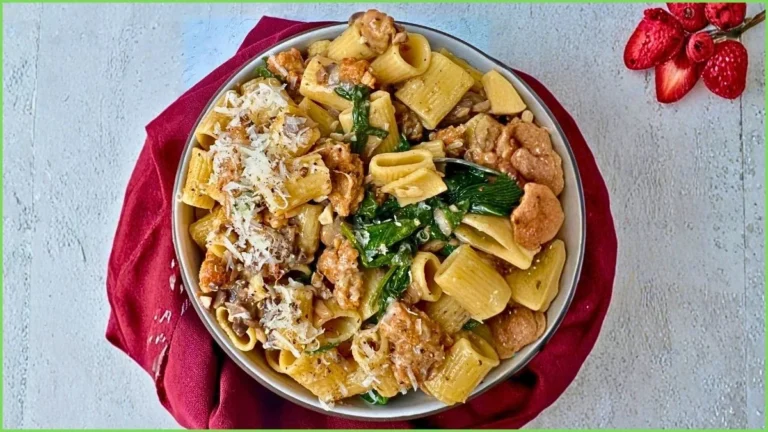

The first time I tried Portillo’s peasant pasta recipe, I wasn’t ready for how much comfort could fit into one bowl. Rigatoni tangled in a savory broth, chunks of sausage and chicken, crispy pancetta, and beans that soak up every bit of flavor – it’s rustic, hearty, and impossible to stop eating.
This dish has a cult following for good reason, and once you make it at home, you’ll understand why fans drive across town just for a taste. The best part? You don’t need Portillo’s to enjoy it.
With a few pantry staples and about 45 minutes, this peasant pasta recipe comes together right in your own kitchen – no drive-thru required.
What Is This Food and Why Do Fans Love It?
Portillo’s peasant pasta recipe is a rustic Italian-American dish built on rigatoni, a light garlic-wine broth, sausage, chicken, pancetta, escarole, and white beans.
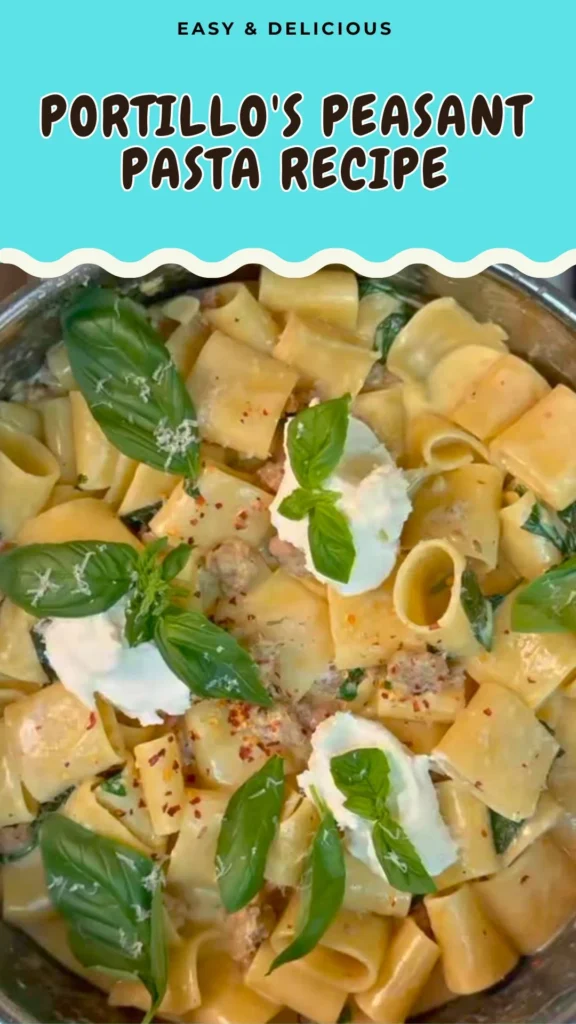
Unlike a heavy cream sauce, this recipe leans on broth and rendered fat for flavor, giving it a lighter but deeply savory profile.
Fans compare it to Italian wedding soup crossed with pasta e fagioli, but with more protein and a bolder, meatier punch. What makes it unique is the balance: bitter greens against salty pancetta, creamy beans against al dente pasta, and a broth that’s brothy enough to sip but rich enough to coat every noodle.
It’s humble ingredients elevated through technique, which is exactly why this peasant pasta recipe has earned such devoted fans since it hit the menu.
The Nostalgic History Behind This Food
The name “peasant pasta” nods to old-world Italian cooking, where resourceful cooks turned humble ingredients – green beans, cured pork, and pasta – into filling, flavorful meals.
Portillo’s peasant pasta recipe borrows that same spirit, transforming everyday staples into a dish that feels indulgent without excess.
Unlike newer, cream-heavy pasta trends that dominate menus today, this recipe stays true to its rustic roots with a light broth base instead of heavy sauce.
It’s a distinction that matters: peasant cooking was never about excess, it was about maximizing flavor from simple ingredients.
That philosophy is exactly what separates this dish from modern Alfredo-style bowls, and it’s part of why longtime fans keep coming back to this particular recipe.
Key Ingredients That Give This Food Its Signature Flavor
Every great peasant pasta recipe depends on a few key players working together. Rigatoni is essential – its ridges and hollow center trap the broth and beans, unlike thinner pasta shapes.
Italian sausage brings fennel-forward warmth, while chicken breast adds lean bulk without overpowering the dish. Pancetta is the flavor backbone, rendering fat that seasons the entire broth before anything else even hits the pan.
Escarole contributes a slightly bitter, leafy contrast that balances the richness, and cannellini beans add creaminess and heartiness without cream.
White grape juice deglazes the pan, lifting all the browned bits into the broth, while chicken stock rounds it into something sippable.
Finally, a generous shower of Parmesan or Romano ties everything together with salty, nutty depth. Each ingredient plays a specific role, and skipping one changes the entire character of the dish.
Portillo’s Peasant Pasta Recipe Ingredients
Here’s everything you need to recreate Portillo’s peasant pasta recipe at home:
- 1 lb rigatoni pasta – sturdy and ridged; substitute penne or paccheri if needed, but avoid thin pasta shapes.
- 1-2 tbsp olive oil – for browning the proteins.
- 8-12 oz Italian sausage – sweet or mild, bulk or casings removed; adjust for spice preference.
- 8-12 oz chicken breast, cut into bite-sized pieces – chicken thighs work too for extra juiciness.
- 4-6 oz pancetta or bacon, diced – pancetta gives a more authentic Italian flavor; bacon adds smokiness.
- 4-6 cloves garlic, minced – fresh garlic only; avoid pre-minced jars for best flavor.
- 1 head escarole, chopped – substitute kale or spinach if escarole isn’t available.
- 1 can (15 oz) cannellini beans, drained and rinsed – great northern beans work as a substitute.
- ½-¾ cup dry white grape juice – for deglazing; substitute extra chicken broth if avoiding alcohol.
- 1-2 cups chicken broth – adjust based on desired broth consistency.
- Salt and black pepper, to taste.
- Red pepper flakes (optional) – for heat.
- Grated Parmesan or Romano cheese – generous amount, for serving.
Tools You Need to Make This Recipe at Home
- Large stockpot (for boiling pasta)
- Large skillet or Dutch oven
- Colander
- Sharp knife and cutting board
- Wooden spoon or tongs
- Measuring cups and spoons
Preparation and Cooking Time
Prep time: 15 minutes
Cook time: 30 minutes
Total time: 45 minutes
Copycat Portillo’s Peasant Pasta Recipe
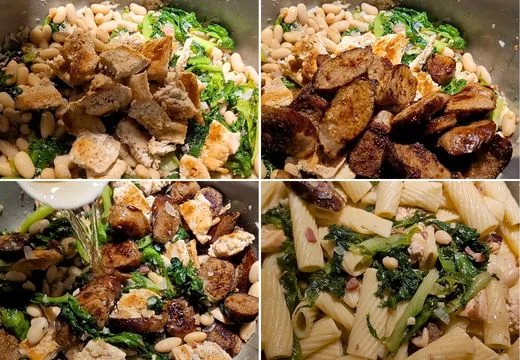
1. Cook the pasta
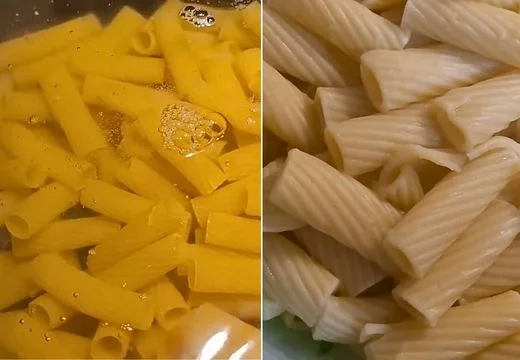
Bring a large pot of salted water to a boil. Cook rigatoni until al dente per package directions. Reserve some pasta water, then drain.
2. Prepare the proteins
Heat olive oil in a large skillet over medium-high heat. Cook diced pancetta until crispy; remove and set aside. In the same pan, brown the sausage, then add chicken and cook until no longer pink. Remove and set aside.

3. Build the broth
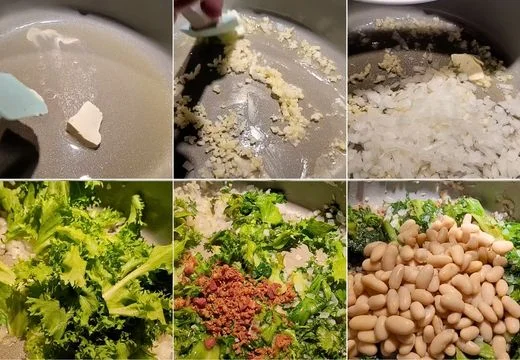
In the same pan, sauté minced garlic for 1 minute. Add escarole and cook until wilted. Stir in cannellini beans. Deglaze with white grape juice, scraping up browned bits. Let reduce, then add chicken broth. Season with salt, pepper, and red pepper flakes. Simmer a few minutes.
4. Combine everything
Return sausage, chicken, and pancetta to the pan. Add cooked rigatoni and toss to coat in the broth. Add reserved pasta water or extra broth if needed. Adjust seasoning to taste.
5. Serve
Plate immediately and top generously with grated Parmesan or Romano.
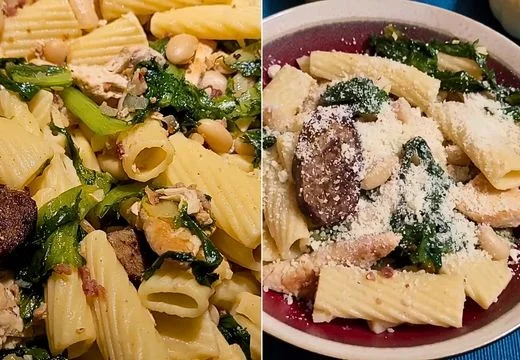
Serve hot.
Pro Tips for Getting the Flavor Just Right
The biggest mistake people make with Portillo’s peasant pasta recipe is rushing the browning step. Take time to properly crisp the pancetta and brown the sausage and chicken – those browned bits left in the pan are where most of the flavor lives, and they’ll dissolve into your broth during deglazing.
Don’t skip the wine unless necessary; it adds acidity that balances the richness of the pork fat and cheese. If you substitute broth instead, add a splash of lemon juice or vinegar to mimic that brightness.
Avoid overcooking the pasta before combining it with the broth, since it will continue absorbing liquid and softening once mixed in. Season in layers – a little salt at each stage builds deeper flavor than adding it all at the end.
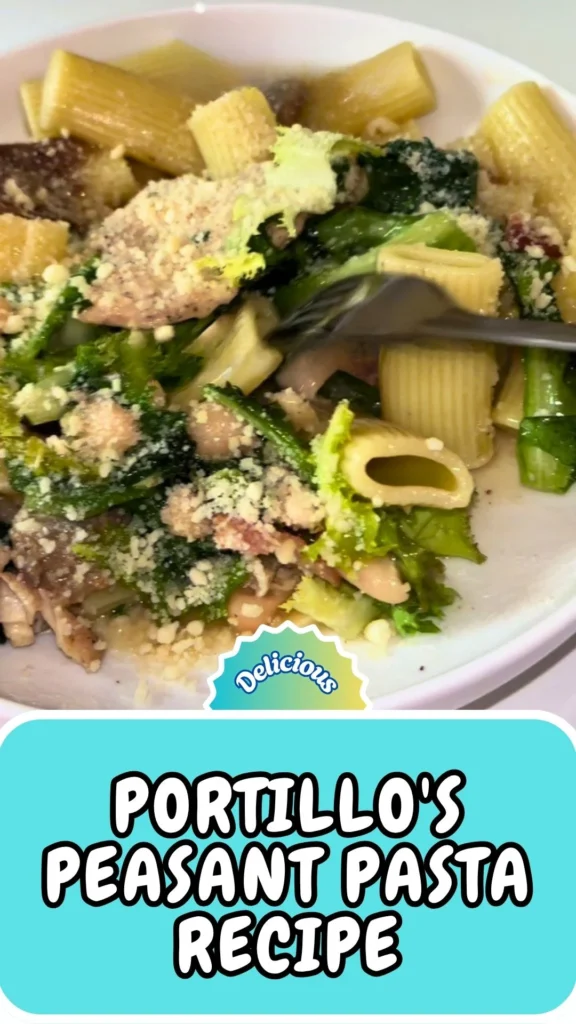
Also, don’t rinse the beans too aggressively; a bit of their starchy liquid helps thicken the broth naturally. Finally, always finish with freshly grated cheese, not the pre-shredded kind, since it melts smoother and tastes noticeably sharper, tying the whole dish together the way the original does.
Easy Variations to Customize This Food
One of the best things about Portillo’s peasant pasta recipe is how adaptable it is. Swap escarole for kale, spinach, or Swiss chard depending on what’s in your fridge.
For a spicier version, use hot Italian sausage and double the red pepper flakes. Vegetarians can skip the meats entirely and lean on extra beans, mushrooms, and a splash of smoked paprika for depth.
Short on time? Rotisserie chicken works great instead of raw chicken breast. Want it creamier? Stir in a splash of heavy cream or a spoonful of mascarpone at the end. However you customize it, the core technique stays the same.
Best Ways to Serve This Food in Your Meals
Portillo’s peasant pasta recipe shines as a standalone main course, but a few pairings make it even better. Serve it with warm, crusty bread or garlic bread to soak up the extra broth – this is almost essential, since the sauce is too good to leave in the bowl.
A simple side salad with a sharp vinaigrette balances the richness of the pancetta and sausage nicely. If you’re serving a crowd, pair it with a light antipasto platter of olives, cured meats, and marinated vegetables for an Italian-inspired spread. For drinks, the same dry white grape juice used in the recipe makes a natural pairing, or a light-bodied red like Chianti if you prefer.
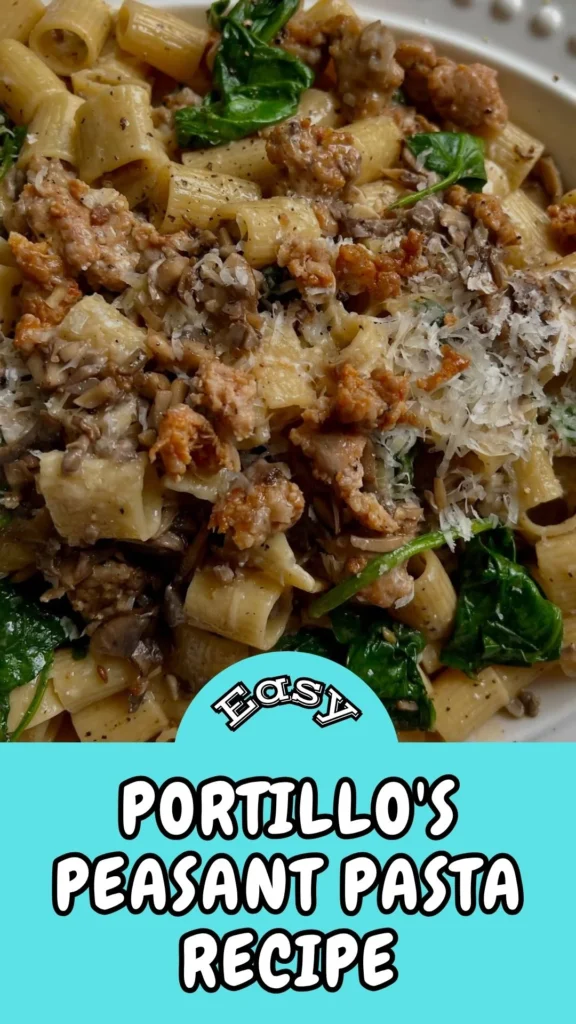
This dish also works well for meal prep – portion it into bowls for lunches throughout the week, since the flavors deepen and taste even better the next day. Whether it’s a weeknight dinner or a dinner party centerpiece, this recipe adapts easily to the occasion.
How to Store and Keep It Fresh
Store leftover Portillo’s peasant pasta recipe in an airtight container in the refrigerator for up to 3-4 days. The pasta will absorb more broth over time, so add a splash of chicken broth or water when reheating.
Reheat gently on the stovetop over medium-low heat, stirring occasionally, or microwave in short intervals, stirring between each. Avoid high heat, which can toughen the chicken and sausage. Freezing isn’t recommended, since the pasta texture suffers upon thawing.
Nutrition Facts and Dietary Notes
A typical serving of Portillo’s peasant pasta recipe contains roughly 550-650 calories, depending on protein amounts and cheese used. It’s a good source of protein and fiber, thanks to the beans, chicken, and sausage. For a lighter version, use turkey sausage and reduce the pancetta.
Gluten-free eaters can substitute gluten-free rigatoni without changing the method. It’s naturally dairy-light aside from the cheese garnish, so those avoiding dairy can simply omit or reduce the Parmesan topping.
Portillo's Peasant Pasta Recipe
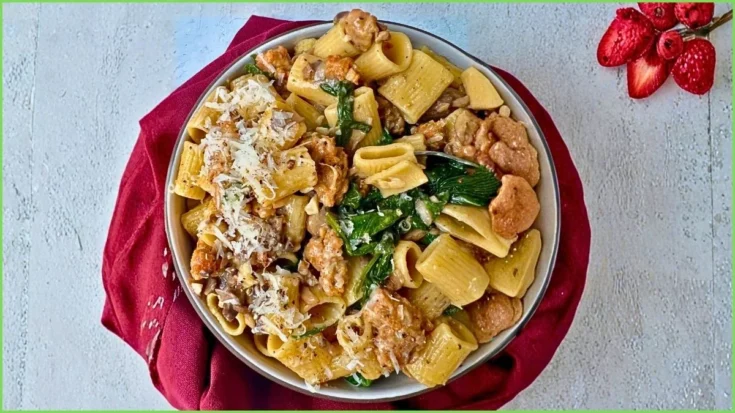
The first time I tried Portillo’s peasant pasta recipe, I wasn’t ready for how much comfort could fit into one bowl. Rigatoni tangled in a savory broth, chunks of sausage and chicken, crispy pancetta, and beans that soak up every bit of flavor – it’s rustic, hearty, and impossible to stop eating.
Ingredients
- 1 lb rigatoni pasta
- 1-2 tbsp olive oil
- 8-12 oz Italian sausage
- 8-12 oz chicken breast
- 4-6 oz pancetta or bacon
- 4-6 cloves garlic
- 1 head escarole
- 1 can (15 oz) cannellini beans
- ½-¾ cup dry white grape juice
- 1-2 cups chicken broth
- Salt and black pepper
- Red pepper flakes
- Grated Parmesan
Instructions
1. Cook the pasta
Bring a large pot of salted water to a boil. Cook rigatoni until al dente per package directions. Reserve some pasta water, then drain.
2. Prepare the proteins
Heat olive oil in a large skillet over medium-high heat. Cook diced pancetta until crispy; remove and set aside. In the same pan, brown the sausage, then add chicken and cook until no longer pink. Remove and set aside.
3. Build the broth
In the same pan, sauté minced garlic for 1 minute. Add escarole and cook until wilted. Stir in cannellini beans. Deglaze with white grape juice, scraping up browned bits. Let reduce, then add chicken broth. Season with salt, pepper, and red pepper flakes. Simmer a few minutes.
4. Combine everything
Return sausage, chicken, and pancetta to the pan. Add cooked rigatoni and toss to coat in the broth. Add reserved pasta water or extra broth if needed. Adjust seasoning to taste.
5. Serve
Plate immediately and top generously with grated Parmesan or Romano. Serve hot.
Notes
Store leftover Portillo’s peasant pasta recipe in an airtight container in the refrigerator for up to 3-4 days. The pasta will absorb more broth over time, so add a splash of chicken broth or water when reheating.
Reheat gently on the stovetop over medium-low heat, stirring occasionally, or microwave in short intervals, stirring between each. Avoid high heat, which can toughen the chicken and sausage. Freezing isn’t recommended, since the pasta texture suffers upon thawing.
Nutrition Information:
Yield:
4Serving Size:
1Amount Per Serving: Calories: 560
Portillo’s Peasant Pasta Recipe FAQs
When you give this Portillo’s Peasant Pasta Recipe a try, you might have a few questions. Don’t worry-we’ve rounded up answers to the most common ones to help you out.
1. Can I make Portillo’s peasant pasta recipe ahead of time?
Yes, prepare it fully and store in the fridge; reheat with extra broth to loosen the sauce.
2. What’s the best substitute for escarole?
Kale or spinach both work well and require similar cooking times.
3. Can I skip the wine in this recipe?
Yes, substitute extra chicken broth with a splash of lemon juice for acidity.
4. Is this recipe spicy?
Not by default, but red pepper flakes and hot sausage can add as much heat as you like.
5. What pasta shape works best besides rigatoni?
Penne, paccheri, or ziti all hold the broth and beans well.
And that’s how you bring Portillo’s peasant pasta recipe straight into your own kitchen – hearty, comforting, and packed with flavor in every bite.
Give it a try this week and let me know how it turns out in the comments below. Don’t forget to bookmark this page for your next craving, and check out more comfort-food recipes on the blog for your next home-cooked favorite.
You can also follow us on Pinterest, and YouTube for more delicious updates and kitchen inspiration. Your feedback and support mean the world to us!